Written
in Croatian
by Bhikkhu Nanajivako Cedomil Velajacic, Ph.D.,
Translated into English by Dr. Snjezana Akpinar
VEGETARIANISM
Introduction by Dr. Snjezana Akpinar
The Vegetarian Manifesto delivered in Europe in the 1920’s is still worth reading. This particular edition was published by the Vegetarian Society in the city of Zagreb, Croatia in 1938 at the eve of World War II in the hopes of “awakening the vegetarian conscience among vegetarians, teaching the vegetarian ideal and thus honestly help humanity come out of today’s darkness into the light of a brighter future.” Since: “without hatred, the dissemination of this truth can only awaken the frozen conscience and encourage some mature thinking.”
It illustrates the concept of vegetarianism, its history, roots and tenets, its economics, and maintenance. It is a valuable document that is of relevance even today, some ninety years after its initial publication.
The Manifesto of the Vegetarian Society
Introduction
Health is one of the greatest ideals of humanity. It is something that we cannot acquire nor maintain without a harmonious cooperation of body and spirit. The function of the minutest particles of our bodily organs depends on our thoughts and feelings. A clean and healthy body can certainly be maintained through a lively sense of optimism, and a gentle joy of life. This can be attained through positive thinking that we will gradually unearth itself thanks to the wonders of ethics. How do we embark upon this path? Proper breathing in a pleasant rhythm, proper nutrition that accompanies a regular digestive system and proper movements in accord with an enduring harmony can balance our morality. These three elements can also awaken a yearning for an all encompassing sense of beauty, a tendency that is an outcome of a tempered and balanced lifestyle and is considered a characteristic of a cultivated human being.
Human beings have reasoning power, therefore they are meant to grasp all earthly phenomena through the strength of their reason and goodness of their senses. Everyday life consists mostly in being preoccupied around nutrition as the basis for bodily health and improvement of the human race. By examining our needs and means of livelihood a human being can gain access to the wondrous mystery of nature. Nature organizes all existence according to the constant rules, to unfragmented, perfect, logic. Therefore it is not shameful to learn from nature, but it is sad indeed when man looks down at the laws of nature. Humanity should adhere to the realm of wisdom in its quest for happiness and approach it with a gentility needed to grasp the almighty echoes of the eternal universe. The vegetable and animal kingdoms delineate this path. Woe to those who by breaking the law of ethics which forbids us to use coercion, looting, pillaging, hurting and killing - means regularly employed for the acquisition of food.
Even if we ignore the fact that all manifestations of life and its universality are closely linked, each and every act of killing is a deplorable act that exposes a lack of moral culture. Our age has strewn throughout the world all sorts of views and opinions on life with a clear tendency to perpetuate greater and greater destruction. No wonder that a reaction arose in the minds of more subtle human beings who still adhere to the injunction: Thou Shalt Not Kill!
This is highest of ethical injunctions inspired many religious reformers, saints and hermits, specially ascetics, to reject meat as food and live only on fruits, seeds and roots. With such pure food they wished to heal their bodies and thus enable a wave of purer and higher breath to stream through them. They wished to become more capable of receiving inspiration and intuitions that would serve loftier ideals.
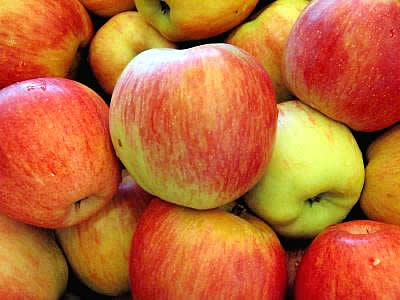 
It is not incidental that some religions proclaim specific fasting days and practices, since religious leaders knew that refraining from food strengthens the capacity to meditate and delve deep into religious truths. The word of the Bible is not mere legend “”God said: See, I have given you every plant yielding seed that is upon the face of the earth, and every tree with seed in its fruit: you shall have them for food. And to every beast of the earth, and to every bird in the air, and to everything that creeps on the earth, everything that has the breath of life, I have given every green plant for food.” And it was so. (Genesis I, or the first Book of Moses , 29-30).
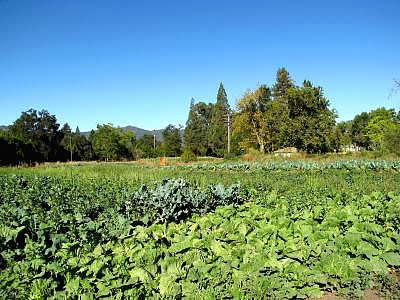 
The fact that many people still heed this injunction throughout India is living proof that evil is has not yet drowned the basic life goal of mankind as the most reasonable creation of God. Each living being has a right to live. Each creature has its task and its sense for life. Each living being is full of meaning and hope, full of joy, as well as pain, it wishes for betterment. Tolstoi was right when he stated that man is no better than the beast which is unable of escaping our tortures. But man can be better because he is capable of pity towards his victims. And if Schopenhauer was right there is no virtue without compassion. The fifth commandment was engraved into the human heart even before Moses went to Mt. Sinai. Also, Lamartine’s wish that men do not kill their brothers and spill blood, because “blood is life, and life cannot be returned”, is a categorical imperative for each human being.
The wisdom of life lies in the search for truth which points each human being toward the paths of heart and mind. The heart is warm and compassionate. Mind is cold and realistic. Both North and South are necessary. Our world needs solar energy. It provides the basic elements of growth. Under the influence of the sun, light, air and water our earth gives us fruits as the only food of the first human beings and as the proper food for modern man. The earth gives us all that is needed for life. Truth be told the hunters and gatherers of this world did reach out for kindred beings and in doing so burdened ensuing generations by showing them the wrong path, but this should not derail man from the proper path that helps us develop an ethical and natural attitude towards life. Only man exposes his health to various ruins due to an unnatural life style. That is why nature warns man through weakness, illness, precipitous old age and early death. Man thanks to his own guilt, falls into despair and destruction. Nevertheless the human race with a little good will and wisdom, can easily retrieve itself from the clutches of evil that hold it hostage due to ignorance.
There are many tools and many paths that lead humanity into a safe harbor. For those of us who are not in a hurry let us remember Kant’s dictum : “It is a pity that we must die just when we begin to see how life should be lived”. One must live according to the ethical precept: “do not do unto others what you do not wish others do unto you”. One should live according to a principle of economics: the lesser the number of victims, the greater the success. Both of these lead humanity into a brotherly circle of compassion towards all that is living, and the direction towards such goals is marked by a bright banner from which a single word shines forth: Vegetarianism!
The Concept of Vegetarianism
The name derives from the Latin word vegetum/vegetabile meaning healthy, pertaining to vegetables. According to Baltzer vegetarianism is a conscious fulfillment of life’s requirements. Therefore it encapsulates a complete life style which accords to an inner conviction that nature and its order provide the norm for bodily and spiritual good. Natural nutrition is only a chapter of this order which depends on our knowledge of nature’s laws. A healthy human impulse grows out of these eternal laws and accords with them. Who goes against these laws suffers both physically and spiritually.
Vegetarianism specifically warns us against the harmful effects of meat and intoxicants and attempts to do away with such harm. It also cares about other needs of life such as sunshine, clean air, light, water, work, rest etc. Vegetarians act as individual helpers and tools for such endeavors. According to the type of food they eat vegetarians are divided into three groups. The first group eats only raw vegetables. The second group constitutes those who eat both raw vegetables and cooked ones. The third group are those who along with vegetables also eat milk products. As far as the motivations for becoming a vegetarian, there are three levels. The first are those who live by the fifth commandment “Do not kill!”. The second are those who wish to attain higher spiritual goals, the third are those who become vegetarian for health reasons. More will be said about this later. All of these categories also stay away from alcohol, tobacco, opiates and the like. Their lives excel in kindness and temperance.
The History of Vegetarianism
Vegetarianism is as old as the human race. The first man was not born with a weapon in his hand in order to hunt animals and kill people, but with hands and feet fit to gather fruits and do good deeds. In the Ice Age when vegetation was scarce man began to eat fish, in the further development of the nomadic life man became a meat eater to finally, thanks to “culture”, man became omnivorous. Thanks to religious and philosophical teachings about the transmigration of souls, vegetarianism came to Greece from the East.
From this Indian and Egyptian origin vegetarianism spread throughout the lands of the ancient Hellenes, the proof of which are the works of the Greek classics. With Pythagoras as a spiritual leader of the Orphic traditions famous philosophers became vegetarians such as Plato, Seneca, Juvenal, Plutarch etc. Poets such as Euripides and Ovidius glorified vegetarian ideals. Christianity found its first adherent among the Essenes who were strict believers in nonviolence. Jesus Christ stems from this group and he substituted the blood sacrifice with the bloodless one. Although many of his early disciples followed the example of their great teacher, the meat eaters soon prevailed. The church managed to keep things somewhat in check only with the various fasting injunctions. So instead of vegetarians beating their swords into ploughshares, and their spears into pruning hooks (Isaiah 2:4) vegetarianism humbly retreated into the hearts of the Nassirians inspiring a higher purpose of life.
Vegetarianism appears on the more contemporary Western scene around the year 1810 with a vision of the English poet Shelley. In 1811 the English physicist Sir Isaac Newton publishes his book entitled: “Return to Nature or Defense of a Vegetable Regimen”, and in 1821 the French painter Albert Gleizes, father of the Cubist movement, proclaims the gospel of Vegetarianism in his work “Thalysie”. The Germans were also inspired by it. Gustav von Struve and Dr. Werner Zimmermann along with the Englishman Simpson establish the “Vegetarian Society” in 1844. Many others soon follow suite all across the Western world, among the more famous ones were Tolstoi in Russia, Graham in America.
In the Balkans vegetarianism became strong in the tenth century in its purest form among the Bogomils, a Neomanichean sect. To this day (1935) it is strongly represented by the Danevites, a religious-ethical society sometimes called the White Brethren of Bulgaria, also found in the vegetarian movements of Belgrade, Zagreb, among the Theosophists, and the Seventh day Adventists. It is latent in the souls of all those who refuse to spill blood. These contemporary vegetarian societies are neither religious nor political, although many like to label this phenomenon as the new social religion based on health. The center of the international Vegetarian Union is in Chekoslovakia (Wahnsdorf).
The Roots of Vegetarianism
Ethics is the science of perennial morals. It is embedded in the soul of every human being. But if the body succumbs to sensuousness and the soul is poisoned with vice, human morality acquires such an odious form and develops traits that overshadow the very essence of ethics enveloping it in an impenetrable mist. The concept and content of ethics bears all that is good and beautiful. There can be no goodness without a heart and no aesthetics without beauty. A good heart hurts no one, not even death. The feeling of beauty disappears in the process of violence. According to the Swiss Professor Vogelin without a knowledge of aesthetics one cannot transform the human race. Ethics forbids force and condemns those who kill animals for the sake of food. There is enough room on this earth for both humans and animals, there is no need to kill each other. Man has dominion over the animal world, since humanity has the power of reason, but animals thanks to their nature can help human beings and befriend them, not only regard them as a succulent meal. A beast becomes forceful and mean when cornered, but there is a significant difference, man kills for fun, a beast kills out of necessity. Man takes life that he has not bestowed, for the sake of his own selfish taste. Animals have the right to live. Ethics, recognizes and respects this right, therefore the basic principle of vegetarianism also applies to plants. Vegetarians do not pick flowers for this reason.
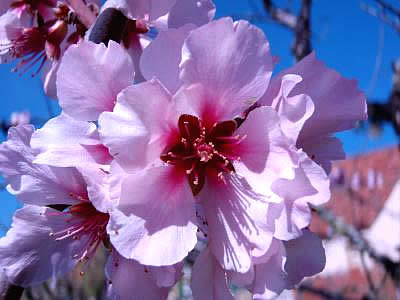 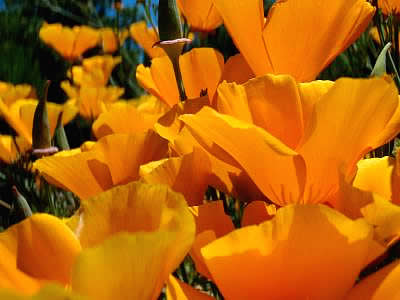
A plant lives for itself and other beings. It sacrifices itself. Every sacrifice is painful, but it is a far lesser evil to destroy a plant because there are some basic differences between plant and animal life. A plant grows back, while a killed animal does not. Never does a child cry while watching the harvest, since it is not a violent scene. But many have screamed in horror upon witnessing the butchering of animals. The horror of this unjust, uneven battle for life, the horror of that deathly fear, the shivers of the last breath… all of that leads one to speculate whether the pleasure of meat eating can be justified by the horrible treatment of animals who are mammals like us, have bodies similar to ours, whose intelligence is not much different from ours. In fact, the lungs of a plant are its leaves, while the lungs of an animal closely resemble the human lung. An animal cannot live even an instant if its lungs are destroyed, whereas a plant can survive for quite some time without its leaves.
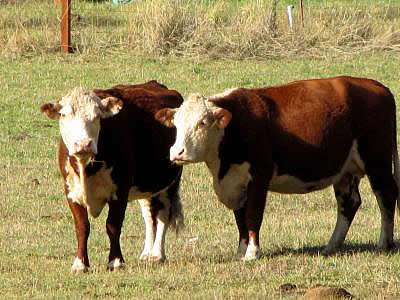 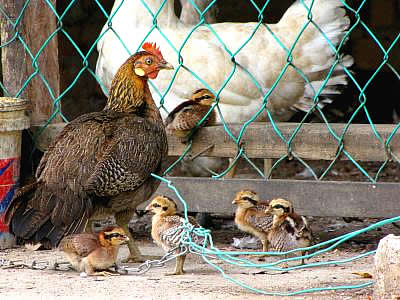
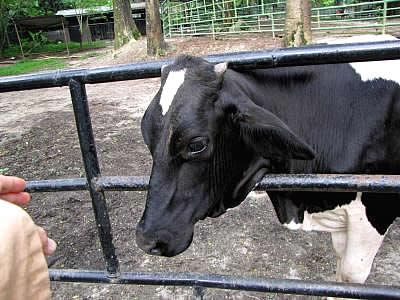 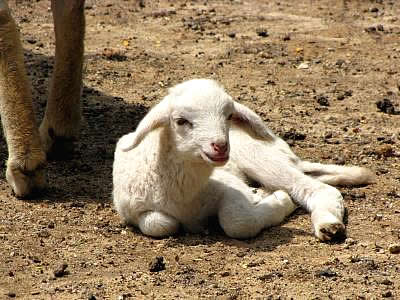
The awareness of animals is something we can see and resonate with, not so with plants.
Maybe the crackling of grass under our feet is a scream of protest, but we do not hear it the same way that we hear the cry of a tortured animal. Nature is the best teacher. For example, nature did not supply human beings with the denture of a wild beast.
 
Hunting is not a postulate of human nature, but an invention of the hunters and gatherers. Tolstoi said that today we may be horrified with the thought of cannibalism, but a day will come when our grandchildren will be horrified at the thought that their grandfathers killed so many animals in order to eat them.
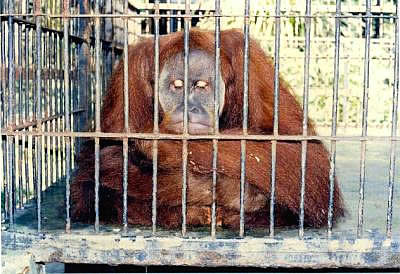
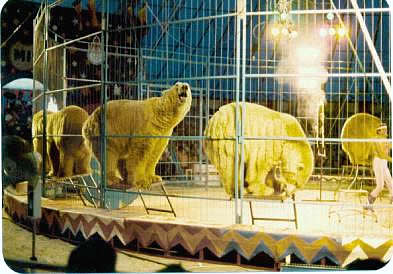
Christianity as a concept of the highest morality is called upon to offer the world a more perfect type of man and to stress a higher ideal of life. That is why Christian morals reject the blood sacrifice of the Old Testament, since it cannot be pleasing to a compassionate God. But where would Christianity be today if it were willing to understand the Vedic traditions and Buddhism that do not offer blood sacrifices even to man? Christ’s teaching might have spread more readily if vegetarianism were part of its practice. And if the commandment not to kill were to include not only humans but all sentient beings. The battles against war would be easier to win, since the killing of animals conditions humans to kill each other by reinforcing a mean trait. According to Professor Becketoff the meat of killed animals is directly proportionate to (human) cannon fodder, and according to Baron von Humboldt the eating of meat is in close relation with cannibalism. Vegetarianism severs ties that link us to blood traditions by appealing to ethics. It preaches the truth, although it also accepts Goethe’s pun: Every truth is simple and that is why a huge minority understand it. Vegetarian ethics condemns all animal torture: hunting, fashion, vivisection, circus, zoo etc. and adheres to common sense reminding one that evil is not destroyed by evil, only increased by it. Therefore vegetarianism is the voice of our human conscience which orders us to do unto others only what we would wish others do unto us.
NEXT >>
return to top
|
