
Translating Sutras Is Practicing the Bodhisattva Path
A Talk given by Li Tao on April 14, 2026
All Buddhas and Bodhisattvas, Venerable Master Hua, all Dharma Masters and Dharma friends, good evening.
My name is Li Tao, I come from New Jersey. I am currently a student at DRBU in the Buddhist Translation Program. The program lasts one year, and I am about to graduate. Today, I would like to share my experiences from this past year of study.
Over the past year, this program has not only given me technical training in translation, but has also transformed the way I understand language, learning, and even my own mind. Looking back, I feel that this year has been both a period of study and a process of inner cultivation.
DRBU’s founder, Venerable Master Hsuan Hua, vowed to bring the Buddhadharma to the West and to translate the Buddhist canon into modern languages. In one of his writings, he said, “When I left the home-life, I wanted to find out why such a perfect teaching as Buddhism was studied by so few people in the world. Why were Protestantism and Catholicism so widespread? After looking into it, I discovered that the reason Buddhism has not spread throughout the world is because we, the disciples of the Buddha, have not translated the Buddhist scriptures into the languages of each and every nation.Catholicism and Protestantism, on the other hand, have had the Bible translated into the languages of all countries. The people of every country can read it and immediately understand it."
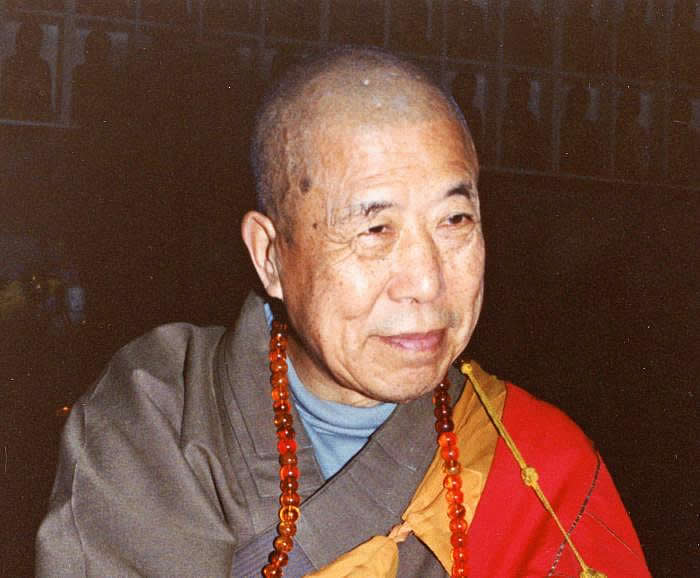
He continued, “If we can do this with the Buddhist scriptures, translating them into as many languages as we are able, Buddhism will become a universal teaching even without our wishing it. So, I made a vow when I left the home-life that, even though I don’t know any other language, as long as I’m alive, I will see to it that the Buddhist scriptures are translated into the languages of all countries. That’s my vow. I’m willing to exhaust my abilities to promote this work.”He also said, “The reason we are able to hear the Buddha’s teachings today is entirely due to the efforts of translators throughout the ages; without them, there would be no path of practice. Translating the scriptures is a sacred undertaking that influences generations to come. Individual accomplishments have limited impact, but enabling the Dharma to enter the hearts of people around the world brings benefits that endure far into the future. May we work together so that more people can understand and put the Buddha’s teachings into practice.”
When I first read Venerable Master Hua’s words, I felt a powerful sense of calling and knew that I wanted to be part of his vision. It was not just an inspiring idea, but something that felt deeply meaningful and necessary. That was one of the main reasons I decided to join the translation program.
Now that nearly a full academic year has passed, I can clearly see how much my understanding of translation has changed. More importantly, I have begun to see translation not only as a skill, but as a responsibility and a form of practice.
First, the program helped me recognize and correct some of my misconceptions about translation. Initially, I understood translation as a mechanical, word-for-word transfer of meaning. However, through studying translation theory and the work of earlier translators, I came to see how factors such as audience, culture, and the translator’s own interpretive choices shape every translation. These elements influence both the effectiveness and the style of the final work. I also came to appreciate the insights of well-known translators, both ancient and modern, whose experiences have made this journey truly eye-opening.
In many ways, translation starts as an internal exchange, a process of first coming to understand the text for oneself before presenting it to others. The goal is not simply to transpose words between languages, but to convey the living spirit and deeper meaning of the message. When a teaching truly resonates within me, I trust that this inner clarity will carry through the translation and be sensed by those who read it.
In our group translation work, each participant begins by independently completing different stages of the process: primary translation, review, and editing. Then, during group sessions, we finalize the translation together. I deeply value this collaborative approach, as it draws on each person’s linguistic strengths and allows everyone to contribute meaningfully. It creates space to clarify difficult words and concepts collectively.
Working in a group is far more effective than working individually. Through discussion, each member presents their understanding, which deepens our collective grasp of the text and helps clarify nuanced meanings. I find this approach not only intellectually enriching but also spiritually rewarding, as it fosters shared inquiry, patience, and mutual respect.
It is also a humbling experience. When I see my work revised - sometimes completely – it sometimes feels like a serious personal attack, but I have to admit that the changes always improve my own version. Equally important is the respect we show for one another’s perspectives. This spirit of openness enables us to work harmoniously and productively, creating an environment where collaboration is both effective and rewarding. I truly enjoy group translation and have learned a great deal from it.
Another realization I have gained is how effective translation can be as a form of spiritual practice for personal cultivation. The Buddhist canon presents itself as a vehicle for wisdom and liberation—a set of tools for self-transformation. Translating the scriptures is, in fact, a noble form of practice, one that encompasses a lot of the spirit of the bodhisattva path.
In one of our classes called Reading Seminar, we are studying the Avataṃsaka Sūtra, the chapter on the Practices and Vows of Samantabhadra Bodhisattva. As I study the sutra, it became clear to me how deeply interconnected the translation of Buddhist texts is with the practices and vows of Samantabhadra Bodhisattva.
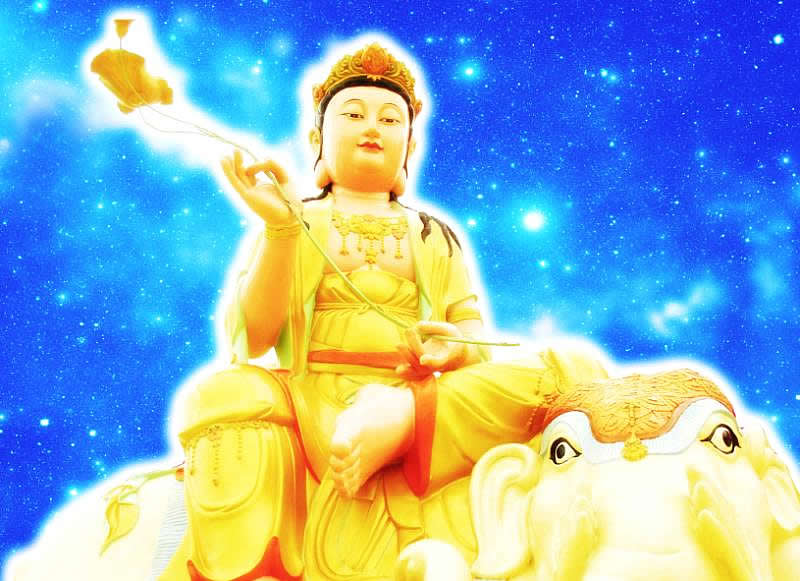
Samantabhadra Bodhisattva proclaims to Sudhana and the assembly of bodhisattvas the Ten Great Vows: paying homage to all Buddhas, praising the Tathāgata, making vast offerings, repenting karmic obstacles, rejoicing in others’ merit, requesting the turning of the Dharma wheel, requesting the Buddha to remain in the world, constantly learning from the Buddha, according with sentient beings, and universally dedicating merit. These ten vows are supreme practices for attaining Buddhahood and also a profound path guiding beings toward rebirth in the Western Pure Land of Ultimate Bliss.In relation to the translation of Buddhist scriptures, translating the canon is the most concrete expression of “making vast offerings” in the form of Dharma-offering. As taught in the Avataṃsaka Sūtra, “Among all offerings, the offering of the Dharma is supreme.” Translators make offerings to the Buddha through their body, speech, and mind, while also transmitting the Buddha’s wisdom to sentient beings. This represents the highest form of Dharma-offering, one that transcends the material and directly benefits the minds and lives of beings.
Furthermore, the scriptures are regarded as the Buddha’s “Dharma-body relics.” To respect and translate them, thereby ensuring the long abiding of the true Dharma, is in fact part of “paying homage to the Buddhas” through reverence for the Dharma jewel. When we encounter the Buddha’s teachings, receive them with joy and faith, and then translate them into modern languages so that more people may share in their benefits, this is “rejoicing in merit.” At the same time, it is also the highest form of praise and gratitude to the Buddha, as in “praising the Tathāgata.”
The process of translation brings the Dharma to life through concrete action and allows it to remain in the world for a long time—this is “requesting the Buddha to abide in the world.” Enabling the Dharma wheel to continue turning across different languages and cultures is “requesting the turning of the Dharma wheel.” Translating in accordance with the needs of sentient beings, making the teachings understandable and practicable, is an expression of “accord with sentient beings,” allowing countless beings to hear the Dharma, cultivate the path, and awaken.
At the same time, in the process of translation, the translators naturally “constantly learn from the Buddha”. By relying on the scriptures to refine body, speech, and mind, and by transforming themselves through wisdom and altruistic action, this also constitutes “repentance of karmic obstacles” on the level of principle.
From this, we can see that translating the scriptures is an exceptionally noble practice that embodies many core aspects of Bodhisattva Samantabhadra’s conduct.
The Venerable Master Hsuan Hua and many of his disciples made the great compassionate vow to bring the Buddhadharma to the West. Overcoming numerous difficulties and obstacles, he established an efficient system for scripture translation, founding the International Translation Institute, the Buddhist Text Translation Society, and Dharma Realm Buddhist University. Because of these efforts, I now have the opportunity to participate in this Buddhist translation program and to learn this Exceptional & effective path of cultivation. For this, I am deeply grateful.
What deeply moves me is that this work is not merely academic or linguistic—it is a living continuation of the Buddha’s wisdom in the world. Each sentence we translate is like building a bridge, allowing the Dharma to cross boundaries of language, culture, and time. Though our individual efforts may seem small, when they are guided by right intention and collective wisdom, they become part of something vast and enduring.
Before I close, I would like to share a passage from the Venerable Master: “Propagating the Dharma is a very important task, but the translation of Sutras is even more important in terms of the propagation of Buddhism as a whole. I hereby seek out those who share the same aspirations as I have. Let us all stand together and work hard in cooperation to translate the Sutras, using everyone’s wisdom.”
These words are not only an encouragement, but also a call to responsibility. In a world that is increasingly interconnected, the need for clear, accurate, and living translations of the Dharma has never been greater. Each of us, in our own way, can take part, whether by translating, supporting, or simply rejoicing in this work.
I sincerely encourage everyone to join in the effort in Buddhist translation. No matter what, you will certainly learn something, and perhaps, more importantly, you will come to understand yourself more deeply, and discover new ways to connect with the Dharma.
Thank you all for your attention.
<< PREVIOUS NEXT >> CONTENTS