Hygiene
Hygiene is the study of health. It researches all of life’s aspects that can influence health and stop disease. Therefore it is often called preventive medicine as opposed to curative, which heals a disease. Hygiene belongs to the medical domain, but medicine does not have a monopoly over it. Everyone has the right to critically observe the conditions that we live in, and because of that vegetarianism wishes to have a say in the matter. Many well known doctors and physiologists speak in its name. Among them figure: Dr. Cl. Bernard, Dr. Bircher-Berger, Dr. J. Grande, Dr. Ragnar Berg, Dr. Carton, Dr. Cellog, Dr. Hindhede, Dr. Haog. Their outlook is based on life experience. Old fashioned medicine cures the diseased part of the body with a mild poison. But as the live cells become more and more impregnated with one poison they become more susceptible to all poisons, (Dr. Bernard) and thus the goal is often not attained. Modern medicine attempts to cure by strengthening the levels of energy and enable the whole organism in order to resist the onslaught of disease and thus seeks a complete and durable healing that requires a complete change of life. It heals by prevention those who are not yet ill. (Dr. Bircher Brenner). Laws of nature are its guide. Breaking such laws has its repercussions not only in the physical health and development of the human race, but also on its senses, on the formation of its collective consciousness. It guides its spiritual growth (Dr. Grande).
Important changes take a long time to implement. Medicine, after taking long and winding detours is now arriving to an ethical stand that reconnects it to Hippocrates (Masaryk). The issue of a natural life-style thus gains a wider meaning and greater value. The basis for the healing of the body is food, therefore a reform of our dietary habits constitute the proper method of naturally educating our bodies. A philosophy of nutrition is being formed through a physiology that studies the science of food intake and hygiene. The evolution of this process is helped by discoveries in the field of chemistry. We now know that vegetables are accumulators of life energy they contain all nutrients we need and can supply them to our body . Animals cannot do that, their bodies like ours, use up the organic nutrients supplied by plants. Only plants can produce an organic nutritive cell. Animals merely transform a cell in order to assimilate it. Plants by accumulating solar energy concentrate so much energy within themselves to become the purest source of food. While animals use up all such matter for the needs of their own body. That is why it is often stressed that vegetarians enjoy food from its primary source and all others from a secondary source, or vegetable derivatives.
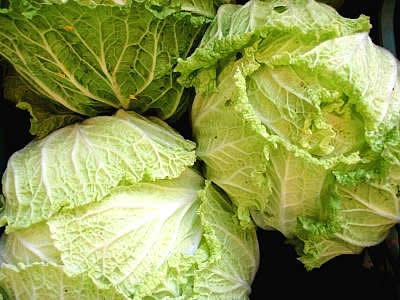 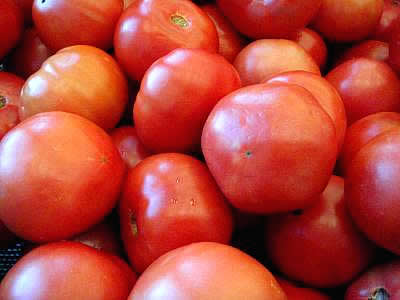
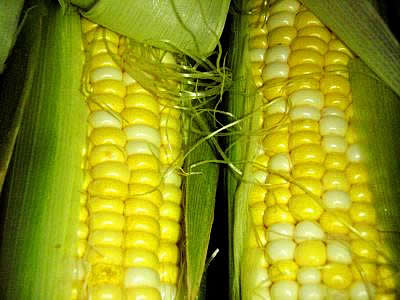 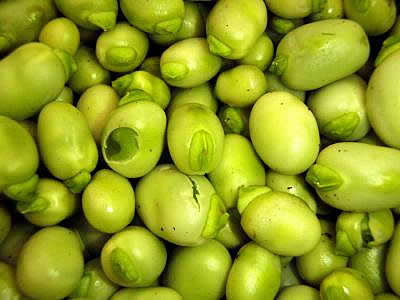
We must be aware that vegetables, fruits and water are the true factors of energy and vitality, while meat and alcohol, its twin, can produce a short and immediate burst of energy and excitement, soon to be followed by weakness and tiredness. (Dr. Carton).
More recently the culture of hygiene was greatly influenced by Dr. Ruzic. Her motto being: return to a vegetarian and as much as possible, raw food diet. One needs to return to the physiological level, by eating what can be found in the lap of nature, without the use of raw force, without destroying a life ennobled by a high level of consciousness.
The bodily structure of a human being, the material and organic makeup of our alimentary tract is that of peaceful fruit eating beings, not of ferocious beasts. According to the science of comparative anatomy (Cuvier) our teeth are such that we can only eat fruits and vegetables. 32 all together, eight of them cutting teeth, four canines teeth and 20 molar teeth that have with a wide area for chewing, like the apes. Our stomachs are not a small rounded bag as in the meat eating beasts, nor are they as complicated and long as those of grazing cattle, but corresponds to fruit eating monkeys. The total length of our intestines is ten times that of our body, whereas in the meat eating beasts the ratio is five to one, and in grazing cattle it is twenty to twenty five to one. By regulating our human alimentary mechanism through the instincts of hunger and thirst our organisms automatically tell us what is needed. It has been proven scientifically that the human body does not need a great amount of proteins, since most of them are already built in. Therefore the assumed bodily need for protein has fallen to a much lower level, or to a fifth of what was previously thought necessary. The assumed quantity of calories has been cut to a half of what we previously thought. The older theory was linked to a fatty regime applicable for city life and industrial workers. But it has been proven that the human stomach is not fit for meat consumption, since the gastric juices that it produces cannot blend with liquids excreted from meat through the course of digestion. Our digestive system is meant to break down only vegetable solids. Due to this the gastric juices tend to dry up.
The human body and the animal body cannot absorb alien proteins or plasma. The blood of one body destroys the red blood corpuscles of an alien body, much like snake poison, alcohol and acids, even the organic acids that our own intestines create. Because of this meat is not digested at all, it rots and deteriorates in our stomachs, since the human organism does not have a tool nor the energy nor the juices that could disintegrate it. Even a wild beast cannot digest meat. It tears its food and eats the blood and muscles and then its strong stomach and short intestines squeeze out the glands and blood.
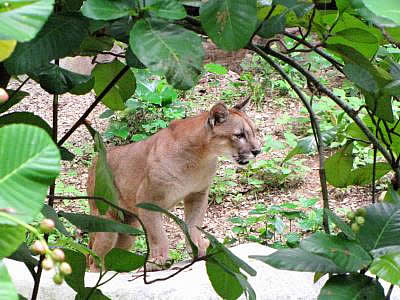 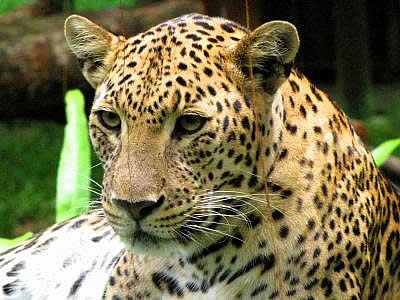
That is what beasts feed on. The butcher, after having killed an animal lets the blood flow, and then hangs the carcass. Meat in that condition is not digestible. It has to sit in our stomach at least three days before it decomposes. The smell of meat that has been sitting around for three days is well known, it is an insult to our ethical and aesthetical senses. And then, this meat sits in our intestines which do not have the strong muscles of wild beasts to squeeze it out. The obvious result is that the rotting keeps going on within our intestines and reaches culmination in a poison known as cadaverin. According to Dr. Carton, a TB specialist, meat is not a physiological product, and therefore it is a poison for the organic cell. It forces the body to go against nature, it weakens it before its time, wears it out. By rotting in the stomach and intestines it creates microbes that cause disease. Dr. Gerson cures TB with a vegetarian diet without salt and with great success.
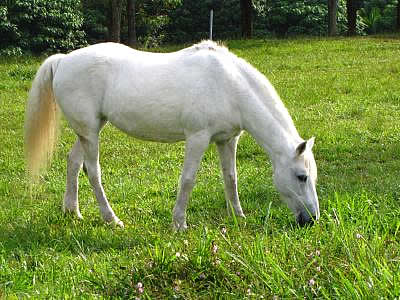
And thus the theory of meat being a source of energy gets rattled. The strongest among animals like the elephant, gorilla, camel, buffalo, horse and ox, do not eat meat.
 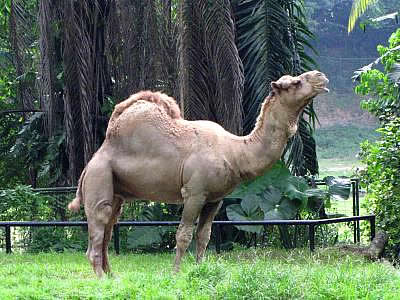
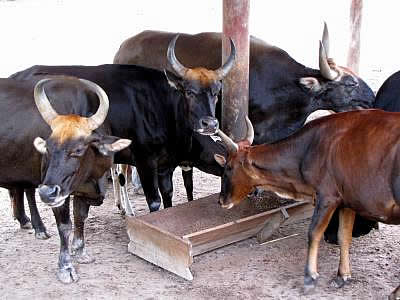 
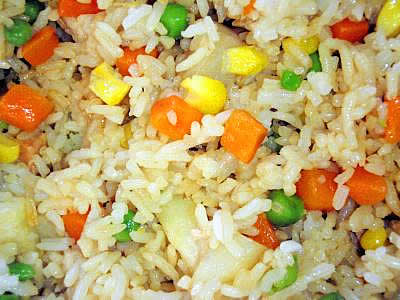
In the East porters who carry big loads on their backs live mostly on rice, olives, vegetables, fruits and bread.
 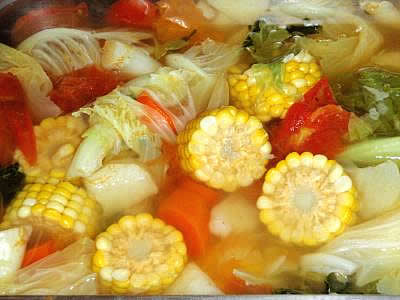
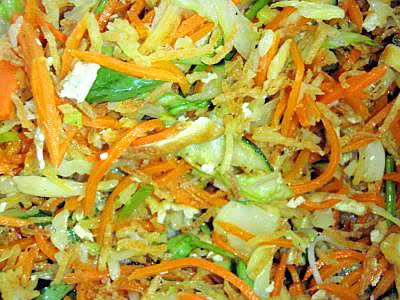 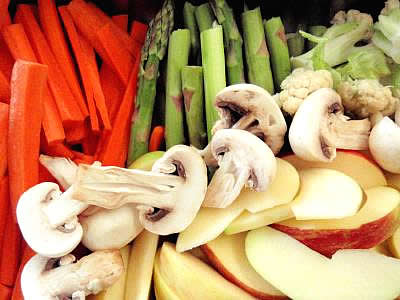
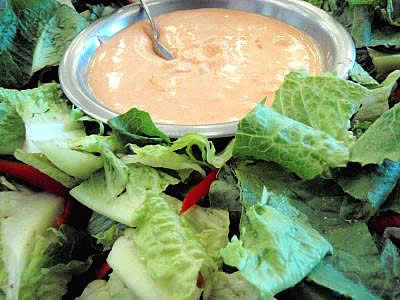 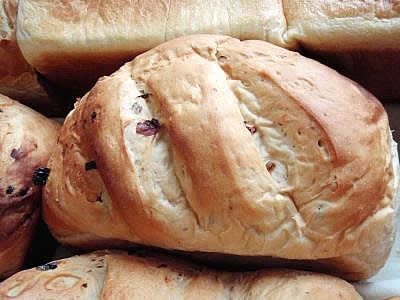
The strength of the Japanese does not stem from meat. People who engage in sports and become champions, runners in particular, give up meat, at least while they are in training. Wild countenance and sheer force are not the same thing. The first is not a vegetarian trait, the second is. However vegetarians do not like overindulgence in sports and gymnastics which goes against the concept of a rational use of energy. Vegetarianism rather employs as a helping tool the method known as Fletcherism. Invented by the American businessman Horatio Fletcher, it rests on the philosophy of chewing. The synthesis of his method, accepted by many doctors and specialists is as follows: if you eat only when you are hungry and only what your appetite demands at the time and chew your food thoroughly, no need to worry further, your organism will take care of the rest. Overcooked mushy food is not good for you, since it cannot be chewed. Best is dry and tough food which forces you to chew and which absorbs a lot of saliva.
Fletcherism propagates a raw vegetable diet that keeps our teeth healthy and guards our overall health.
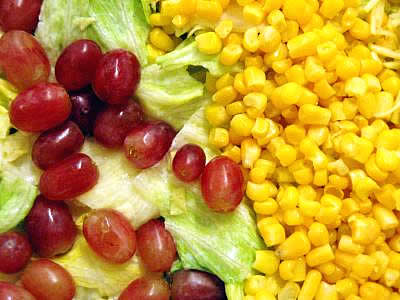 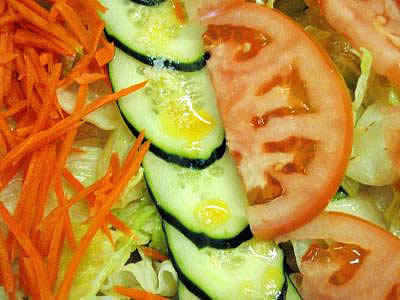
Modern man also welcomes the teachings of Dr. Haig which states that uric acid is an obvious outcome of most diseases since it is a product of decomposed surplus proteins that are found in meat. He also claims that phosphoric acid is necessary for healthy teeth, nerves and bones reminding us that vegetables contain twice as much phosphorus as meat. This is particularly important for children who need at least five grams of phosphate per day. He also uses his knowledge about mineral salts and vitamins that can be extracted only from vegetables which get direct sun energy.
Vegetarianism teaches that meat upsets young people approaching puberty. It understands the close links between alcohol, tobacco and meat, points out the various diseases that are due to meat eating and can be cured through vegetarianism. It gives an initiative to modern science encouraging the search for new methods of healing and preserving health. It seriously warns the medical profession that the components of our blood are base reactions and that meat has an excess of acids. Vegetarians are pleased to welcome a new trend in medicine whereby physicians recommend a vegetarian diet as a cure against illnesses of the digestive system, rheumatic and nervous disorders.
Modern medicine also takes into consideration the psychological factor, stating that the power of suggestion is closely connected with a natural life style. The awareness that one lives in harmony with nature influences our thought process. Love for nature and living beings is a deciding factor of a brotherly instinct among human beings. It destroys egotism and melancholy as well as sentimental egotism linked to a diseased mood. With this kind of healing we not only gain our health but also a new direction in life.
Economics
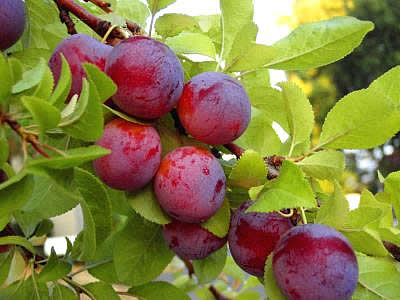
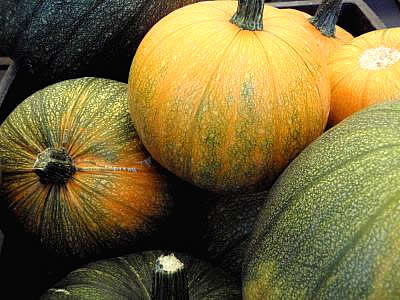
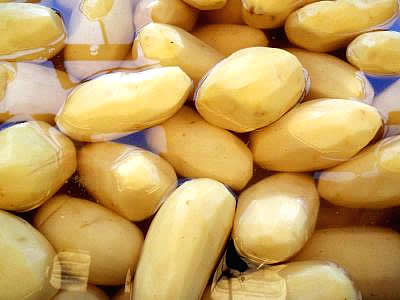
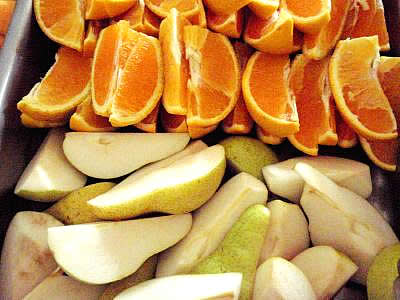
Today’s crisis is also an outcome of economic policies for which vegetarianism is not to blame. But would the crisis ease a bit if we were to turn to vegetarianism in greater numbers? Or is vegetarianism only a utopian vision, an episode in the historical flow of our human race? If we look at the research of doctor professor Johann Ude we will learn the following: A national business consists of various elements that are mutually connected due to a specific plan. The goal of each national business system is to ensure a living worthy of mankind, respectful of the honest profitable work of every human being. To economize is to thoughtfully distribute the means and needs of essential products. If we call these products goods, it is clear that production, use and distribution through commerce can be both beneficial and dangerous for the national economy. That is why the problem of economic goods is crucial for the fate of a nation and its productivity. How much and which products to include? From the battle between production and expenditures we can draw the following conclusion: the more land and its products, the bigger the work force, the more man hours spent on noxious needless anti social goods and the fewer natural land goods available, the smaller the work force the less available capital for useful and socially friendly productivity. Absolute ethics would demand that in a good national system of production one produce first that what is necessary, then that what is useful and last of all that what is pleasurable. This is possible only if we apply euobiotics, or a productivity according to the laws of ethics and national economics. The father of euobiotics Prof. Ruzic from Zagreb, recommends that life be adjusted according to physiological laws The well known physiologist Ragnar Berg adds to this the following rule of hygiene: an economical and healthy diet should include seven times as many potatoes, roots, bulbs and green vegetables and fruits most should be eaten raw. This is the biological meaning of vegetarianism which according to Dr. Vogel cannot do any harm.
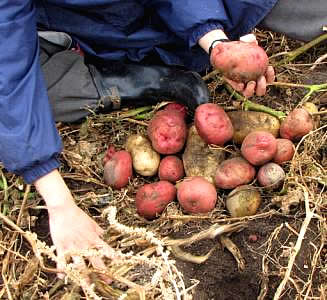 
But, Prof. Ude asks a further question, for a national economy is it better to produce vegetarian food or meat. Here we can turn to the Danish doctor Hindhede, who saved his countrymen during the First World War with the help of vegetarianism. According to his calculations seven people can survive on a single acre of arable land if they implement a lacto vegetarian diet. Germany alone could feed 185 million, or three times its present population, Europe 1.704 billion, or four times its population, the US 1.178 billion or ten times its population, Russia, Brazil etc, could do much much better than that. Migge a specialist in horticulture, tells us that a small settlement of about ten hectares could accommodate 250 families of five or about 1250 people. Schiele tells us that ten million people consume the amount of food that should be enough to feed 35 million people. A single ox consumes food that would be enough to feed six people and gives enough food to feed a single person for a hundred days. The same area of land that feeds one carnivore can feed ten vegetarians. In order to produce 211 calories from meat we lose 880 Calories from the1091 total needed to feed a 60 kilo pig fed on grain and skimmed milk. The numbers rise when beef is in question. According to Dr. Lotar Meyer one hectare can produce 2,000 kilograms of wheat, containing 200kg of protein and 1,400 of starch 20,000 kgs of potatoes, with 400 kgs of protein and 4000 kgs of starch
20,000 green beans with 600 kgs of protein and 12,000 kgs of starch.
One hectare producing 2000 kg of oats gives us only 420 kilograms of pork, which is further divided into 330 kgs of meat with 50 kgs of protein, 122 kgs of fat, a total of 300 kgs of starch. 2000kgs of wheat give us 350kgs of live cattle or 210 of average fatty meat with 40 kgs of proteins, 36 kgs of fat or a total of 90 kgs of starch.
In order not to bore you any further with numbers it sufficient to point out that in order to breed cattle for meat we loose 80% of our vegetable crops and their nutrients. And where is the workforce needed for breeding cattle in order to produce meat? Where is the toil and labor, the dirt of this most unpleasant kind of work?
Vegetarianism’s social principles claim that it is unethical and also wasteful to ignore the laws of nature which would help us avoid national debts, illness, wars etc. Vegetarianism entices us to accept Kant’s rule: Live in a manner which is always in accord with the laws of the universe. Vegetarianism would decrease cattle breeding, and allow animals to be only our helpers in agriculture.
An oversensitivity that we seem to have about all of this, does not harmonize with the modern needs of neo-malthusianism which entices us to decrease the world’s population on a voluntary basis. After the war there were around one billion seven hundred people. Even if the black race were to double every forty years, the yellow every 60 and the white every 80, we would still have plenty of space and plenty of food if we were to follow the vegetarian way of life.
Even a vegetarian could change somewhat, under dire circumstances, but in today’s world a vegetarian cannot understand why people kill animals for sheer pleasure. To blur need and pleasure is to mix the rule of cause and effect, and the health of nations ends up paying dearly for this mistake. It is ironic when people claim the if we do not eat animals they will eat us. Never did a calf attempt to eat a human being, only wild beasts do that, and even vegetarians protect themselves against beasts the best they can. Man has no right to kill an animal solely because he has bred it.
Does a parent have the right to kill his child? A rabbit, deer, wild boar etc, can do harm to a farmer, but we can protect ourselves against that. There is plenty of room for humans if we rationally settle free land. One can live a vegetarian life even in the far north at forty degrees below zero, as the eighty year old Russian biologist Michurin proved by acclimatizing southern fruit trees to the north. He is on the way to grow wheat in permafrost, the kernels of which will be bigger than a green pea. There is no excuse for the Eskimos. The human mind which creates all sorts of horrors can surely find the right solution when absolutely necessary. Thomas Edison, that genius of a man, who admitted to be a vegetarian, tells us that man is in a position to create everything except a machine that can think for us and a machine that would give birth for us.
The Japanese do not have a big cattle industry nor a dairy industry. Instead of disappearing they seem to be multiplying to everyone’s amazement. When we say back to nature, we do not mean let’s revert to being monkeys. The vegetarians wish to help humanity turn away from a path that distanced us too much from nature by fixing the mistakes that grew out of our material culture. Our spiritual crisis is an outcome of today’s manner of life, it cannot be solved if we do not renew our spiritual life. Naturalism is not an excuse for magic, however. We must not assume that our behavior is justified if we only follow our natural instincts. Such behavior can simply be immoral if it harms another being, and worse than a crime perpetuated in nature. Between two evils chose the lesser one. To live without meat is a lesser evil than killing because of meat. By this we do not mean that it is bad to be without meat, but we know that it is hard to give up a pleasure. As fighters for ideas we do have enough reasons to dissuade our brethren to behave in a way that can also harm themselves and the moral consciousness of this world. Magic is the conquest over egotism, otherwise we will never become altruists nor have a successful social life. We have to face danger straight on. When we see that more than 90% of our children have rotten teeth, that every other pauper has TB, that suicides are a daily occurrence, that young people are dying from bad nutrition and unnatural life styles, a curse seems to be following us from generation to generation, leaving in its wake a degeneration of the human race. It is high time to raise our brows and push back the unbridled elements of human negation and replace these with life giving forces. Those who have long since found the key to a lost paradise can help us on this path.
Among the carriers of good news one can certainly name Prof. Trumpp who insists that one needs to propagate vegetarianism for the sake of our children. Prof. Trall tells us that meat, blood and animal fat contains mostly non-beneficial and used up matter and diseased excretions, Dr. Alison freely admits that without meat doctors would have a very meager business. We do not live in order to give the medical profession business, but to, as Nietzsche said, live as simply as possible and full of compassion for animals. That compassion is what Wagner felt as the highest characteristic of a moral being, and as a source of his great art. Full of meaning are the brave words of Bakunin who claimed that killing animals is but a small step away from killing humans. Today this Russian professor of jurisprudence would be ridiculed if he were to expound on his principles of disarmament, but we vegetarians would gladly nominate him for the Nobel Peace prize, since we know that only with such ideas can we bring peace to the world.
Conclusion
This is the manifesto of the vegetarian Society delivered in Zagreb. This booklet is a mere drop within an ocean of literature. Please bear this in mind. The quotes of well known and illustrious professors and doctors only augment the importance of this brochure. The warmth of our hearts and the sharpness of our minds can do no more than soften the blow of our horrendous present. Without hatred, the dissemination of this truth can only awaken the frozen conscience and encourage some mature thinking. It is not the aim of this belief to upset souls with a revolution of ideas. Love, brotherhood and happiness are the main stays of vegetarian ideology. Its task is reformatory. Evolution is its tempo, critique its compass. To awaken the vegetarian conscience among vegetarians, to teach the vegetarian ideal is to honestly help humanity come out of today’s darkness into the light of a brighter future. The naturalism of vegetarianism is capable to bind us to mother nature. The pacifism of the vegetarians is a strong voucher for peaceful solutions of international conflicts. A realistic review of causes and effects leads to a successful method for bettering our lives and their progress. And since it is the duty of each member of this society to pay attention to its needs, the vegetarians of Zagreb deem it necessary to strengthen their selfless service around a social rebirth by forming this society that was inaugurated in 1928.
<< PREVIOUS
return to top
|
